Global Wave Dynamics at Breakbulk Americas 2026: What We Heard, What We Learned and What Comes Next
28th September 2026
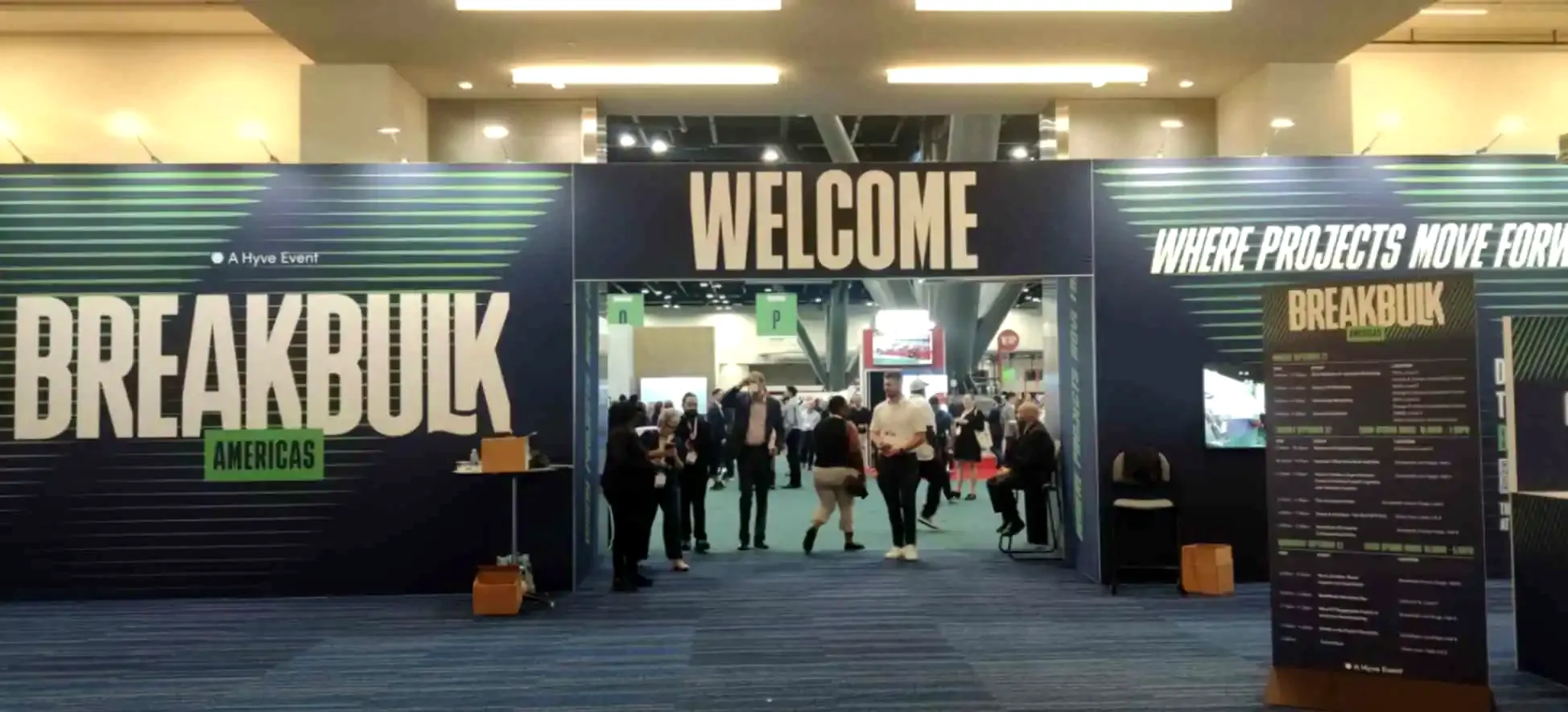
Breakbulk Americas 2026 brought the project cargo and logistics community together in Houston. For Global Wave Dynamics, the two days were defined by conversations with industry leaders about growth, operating pressure, technology and the work that sits behind every complex shipment. Across the exhibition floor, meetings and industry sessions, the event brought together freight forwarders, project cargo specialists, carriers, ports, shippers, technology providers and businesses supporting complex cargo movements.
For Global Wave Dynamics (GWD), attending Breakbulk Americas was less about being present at another industry event and more about listening closely to how logistics companies are operating today.
The conversations in Houston moved quickly beyond cargo movement itself. Leaders spoke about the operational workload surrounding every shipment: documentation, quotations, carrier communication, customer updates, finance, reporting, systems and exception management. Those discussions reinforced a simple point: the way work is organized behind a shipment is becoming just as important as the movement itself.
One of the clearest themes we heard at Breakbulk Americas was that growth is creating a different kind of pressure for logistics businesses.
More cargo does not only mean more shipments. It also means more quotes, more documents, more customer communication, more supplier coordination, more invoices and more exceptions. The supporting workload expands with the business, often faster than the operating model was originally designed to handle.
That is where the conversation changes from staffing to structure. Instead of asking only how many more people are needed, companies are increasingly asking which activities truly require specialist judgement and which can be standardized, measured and managed through a dedicated support model.
This was especially relevant in discussions around freight forwarding and project logistics, where experienced teams need to stay close to customers and exceptions while repetitive operational work is handled with greater consistency.

Breakbulk Americas is built around complex cargo, and complex cargo creates complex information.
Shipment instructions, carrier documents, customer records, compliance information, milestones and supporting paperwork all have to remain aligned. When documentation is incomplete or inconsistent, the impact can move quickly from the back office into the operation.
Several conversations in Houston reinforced how much experienced team capacity can be absorbed by checking data, chasing information and keeping records current. That work is necessary, but not all of it needs to remain with senior operational teams.
For GWD, this is one of the areas where structured support can create immediate operating leverage. Our Shipping & Logistics capabilities are designed around clearly owned workflows that support execution without separating the process from the client operation.
Another practical theme at Breakbulk Americas was responsiveness.
Customers increasingly expect fast answers, but a quote can still involve multiple internal steps: rate sourcing, supplier communication, margin checks, approvals and final preparation. When those steps depend on disconnected emails and manual follow-up, turnaround time becomes difficult to control.
The issue is not only speed. It is also the amount of commercial capacity spent coordinating the process instead of progressing the customer opportunity.
This is the type of workflow GWD addresses through FreightX, which brings rate search, approvals and customer-ready quotation preparation into a more structured operating flow.
The discussions at Breakbulk were useful because they connected this challenge to real operating environments rather than treating quote automation as a standalone technology topic.
One of the more important observations from Houston was how often operational conversations extended into finance.
The shipment may be complete, but the workflow continues through billing, invoice validation, reconciliation, exception handling and financial reporting. At scale, these processes can create just as much operational friction as the shipment-side activities that receive more attention.
Manual invoice checking may work at lower transaction volumes, but as complexity increases it becomes harder to identify exceptions quickly and maintain visibility across multiple suppliers, customers and systems.
That is why Global Wave Dynamics(GWD) treats finance control as part of the logistics operating model. AuditX is designed to support invoice capture, validation, duplicate identification and exception visibility.
AI and automation were visible across the Breakbulk Americas agenda and across conversations on the exhibition floor.
The interest is understandable. Logistics businesses are looking for ways to reduce repetitive work, improve visibility and make information easier to act on. But one point remained consistent: automation only works well when the underlying process is clear.
Before applying technology, businesses still need to understand where work enters, who owns each stage, what information is required, where handoffs occur and which exceptions need human judgement.
That is why GWD follows a practical operating sequence: Assess, Run, Improve, Automate and Scale. Technology comes into the process where it can remove friction and improve control, not simply because it is available.
The same philosophy underpins our broader operating process.

Perhaps the most important takeaway from Breakbulk Americas was the way logistics companies are thinking about external support.
The conversation is moving beyond task-by-task outsourcing. Companies increasingly want dedicated capability with clearer ownership, measurable service levels, trained teams, governance, reporting and continuous improvement.
For some businesses, that may start with one workflow. For others, it can extend across operations, finance, IT and back-office functions.
Where the scale and strategic importance justify it, that model can develop into a client-specific Global Capability Center. GWD's GCC-in-a-Box provides a structured route from diagnosis and design through transition, stabilization and expansion.
The value is not simply in where work is performed. It is in creating an operating capability that can scale with the business while maintaining client-specific governance and control.
The two days in Houston gave us a clearer view of what logistics leaders are prioritizing.
They want growth without uncontrolled support headcount. They want a faster response without sacrificing accuracy. They want technology that improves the workflow rather than adding another layer of complexity. They want better financial visibility, stronger process ownership and external partners that operate as accountable extensions of the business.
Most importantly, the conversations at Breakbulk Americas reinforced that there is no single operating model for every logistics company. A freight forwarder, project cargo specialist, NVOCC or customs-focused business may face very different constraints.
The right starting point is therefore not a generic transformation program. It is understanding where operational effort is being consumed today and where the business would benefit from a different structure.

Breakbulk Americas 2026 gave Global Wave Dynamics more than two days of meetings. It gave us a closer view of the pressures, priorities and operating decisions shaping the logistics industry.
The most valuable discussions were not about broad transformation promises. They were about specific problems: where teams lose time, where processes break, where management lacks visibility and where technology can realistically improve execution.
Those conversations will continue to shape how Global Wave Dynamics (GWD) works with logistics businesses after Houston, with the same focus on practical operating improvement, stronger control and scalable capability.
Breakbulk Americas 2026 was a valuable reminder that the strongest logistics operations are built not only around how cargo moves, but around how effectively the business works behind every movement.