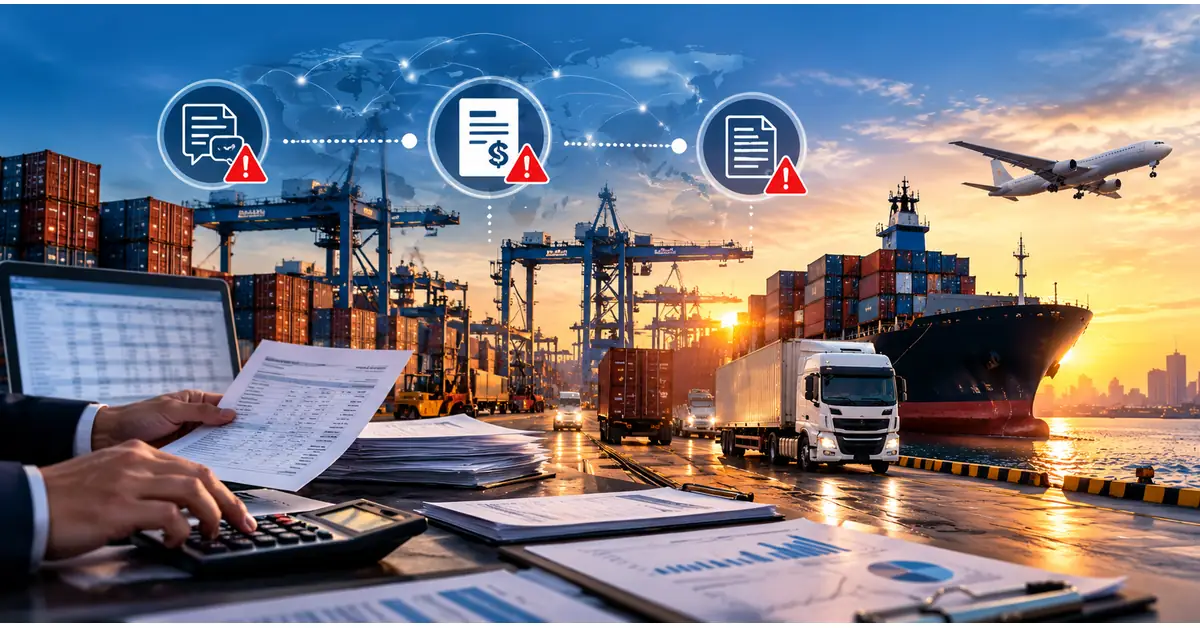
The Rise of Hybrid Logistics Operations: Managing Digital and Manual Processes Together
8th October 2026
Logistics is not becoming fully digital overnight. While automation, AI tools, and digital platforms are transforming the industry, most logistics operations today still run in a hybrid environment. That means part of the workflow is digital, and part of it is still manual.
For many businesses, the real challenge is not adopting technology. It is managing both systems together without creating inefficiencies.
A hybrid logistics model is one where:
For example:
This mix is not temporary. It is the current reality of most logistics operations.
There are several reasons why logistics cannot go fully digital instantly:
As a result, businesses must operate across both environments simultaneously.
Hybrid operations introduce a unique set of challenges:
For example, a shipment might be booked digitally but delayed due to missing manual documentation. Without proper coordination, these gaps become bottlenecks.
Many businesses try to solve hybrid challenges by adding more technology.
But the real issue is not the absence of tools; it is the lack of structured processes connecting digital and manual workflows.
Without process alignment:
To manage hybrid logistics effectively, businesses need standardized workflows.
This includes:
When workflows are standardized, hybrid operations become manageable instead of chaotic.
Hybrid logistics is less about systems and more about coordination.
Every shipment involves multiple touchpoints:
If even one stage is not aligned, the entire process slows down.
Strong coordination ensures:
Managing hybrid logistics requires consistent effort and attention.
Outsourced support can provide:
This allows businesses to maintain efficiency without waiting for complete digital transformation.
Global Wave Dynamics supports logistics businesses in managing hybrid operations by bringing structure to both digital and manual workflows.
Our approach focuses on:
We help businesses maintain efficiency and control, even when operations are split between digital platforms and manual processes.
The logistics industry is moving toward more digital systems, but the transition will be gradual.
Businesses that succeed will not be the ones that digitize everything overnight. They will be the ones that:
According to industry trends, logistics is evolving toward integrated, technology-driven operations, but process discipline remains critical.
Hybrid logistics operations are not a temporary phase; they are the current operating reality.
The goal is not to eliminate manual processes immediately, but to manage them effectively alongside digital systems.
Businesses that focus on coordination, consistency, and process discipline will navigate this transition more successfully than those relying on technology alone.