Airport Ground Handling: The Hidden Engine Behind On-Time Performance
19th October 2026
When passengers think about flight delays, they usually picture weather disruptions or technical issues. What often goes unnoticed is the critical role of ground handling: the set of operations that take place between an aircraft's arrival and its next departure.
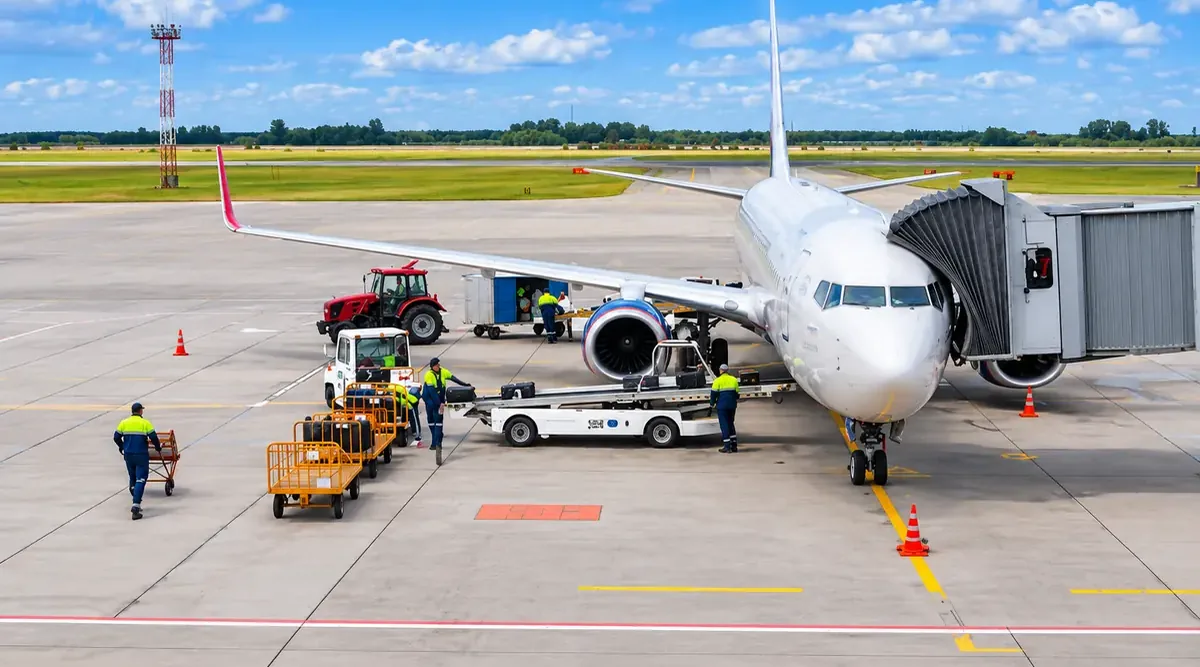
From baggage handling and fueling to catering and aircraft cleaning, ground handling is the invisible engine that keeps airline schedules moving. In today's high-utilization environment, even small inefficiencies on the ground can quickly turn into major delays.
Ground handling is far more complex than it appears. It includes:
All of these activities must happen within a very tight turnaround window. A delay in any one area can impact the entire schedule.
Airlines today are operating with tighter schedules and less buffer time. Aircraft are expected to spend more time in the air and less time on the ground.
This means:
For example, a 15-minute delay in baggage handling at one airport can lead to missed connections, crew disruptions, and scheduling issues across the network.
Ground handling involves multiple teams working simultaneously:
Each team has its own responsibilities, but all must work in sync.
Common coordination challenges include:
Without strong coordination, even well-planned operations can break down.
Inefficiencies in ground handling don't just cause delays; they create direct financial impact:
Over time, these costs can significantly affect airline profitability.
Despite advancements in aviation technology, many ground handling processes still rely on manual coordination.
Reasons include:
This makes process discipline and coordination even more important.
Airlines that perform well in turnaround efficiency focus on structured processes rather than just speed.
Key practices include:
These practices help reduce variability and improve consistency.
Outsourced operational support can strengthen ground handling efficiency by managing the coordination layer behind the scenes.
This includes:
By offloading coordination tasks, on-ground teams can focus on execution.
Modern aviation is increasingly data-driven, and ground handling is no exception.
Data helps in:
However, collecting data is not enough; it must be analyzed and acted upon consistently.
Global Wave Dynamics supports airlines and aviation service providers by strengthening the coordination and operational processes behind ground handling.
Our approach focuses on:
We act as an extended operational arm, helping airlines improve turnaround efficiency and maintain strong on-time performance without increasing internal workload.
Ground handling may not come to passengers' attention, but it definitely has its place in airline efficiency.
With stricter schedules, higher customer demands, and higher stakes, airline companies have to make ground handling a key strategic focus rather than treating it as just an operational task.