Why Real-Time Visibility Is No Longer Optional in Logistics Operations

15th October 2026
For years, logistics visibility meant one simple update: "Your shipment has been dispatched." That was enough. Customers accepted uncertainty, and businesses operated with limited real-time insight into what was happening between origin and destination.
That reality has changed.
Today, logistics activities take place in an environment where customers expect updates all the time, the operational teams need instant decision-making capabilities, and disruptions come faster than before. In this environment, real-time visibility is not a value-add; it is a baseline requirement.
There is an important difference between tracking and visibility.
Tracking tells you where a shipment is.
Visibility tells you what is happening, what might go wrong, and what needs to be done next.
Modern logistics visibility includes:
Businesses that rely only on basic tracking often find themselves reacting to problems. Those with real visibility can act before those problems impact operations.
There are many reasons why real-time visibility has become important now:
Industry insights reveal that logistics is headed towards a predictive and real-time decision-making system that allows companies to foresee challenges rather than react to them.
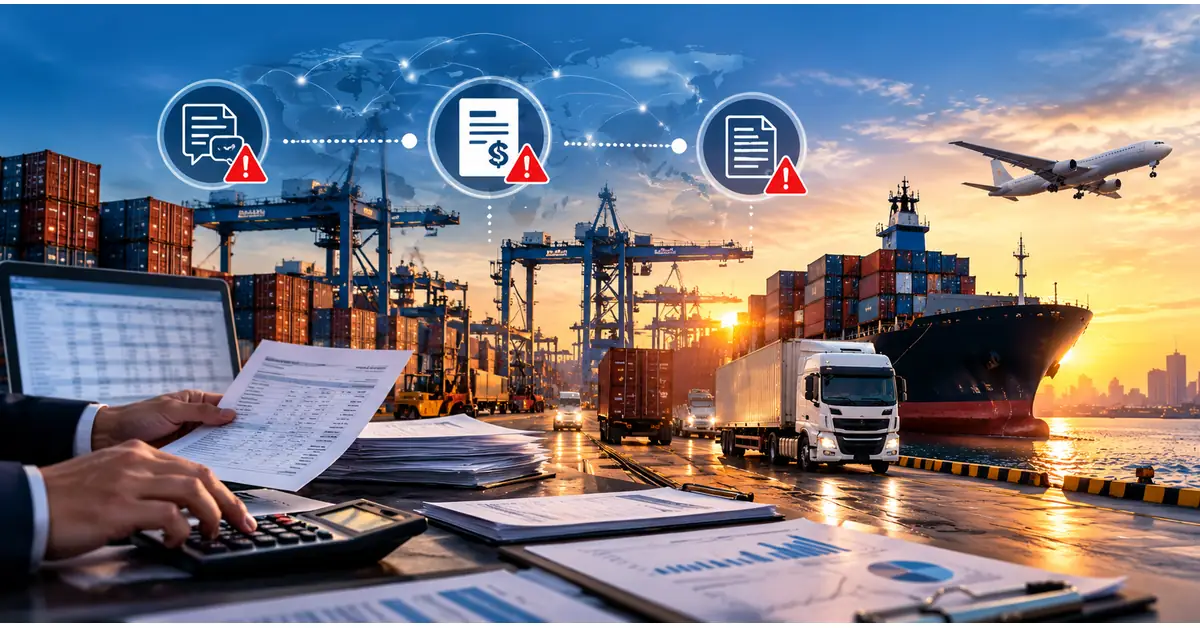
When visibility is limited, the impact is not always immediate, but it accumulates over time.
Common issues include:
For example, a delayed shipment without visibility often results in multiple follow-ups, escalations, and manual coordination, all of which consume time and resources.
Real-time visibility is not just about monitoring shipments. It acts as a control layer across the entire logistics operation.
With proper visibility, businesses can:
This shift turns logistics from a reactive function into a proactive one.
While the benefits are clear, building real-time visibility internally is not always simple.
Challenges include:
This often results in fragmented visibility, where different teams see different versions of the same shipment.
Outsourcing the operational layer behind visibility helps bridge this gap.
A structured support model can:
This ensures that visibility is not just available, but actively used to improve operations.
Global Wave Dynamics helps logistics businesses build real-time visibility that goes beyond basic tracking.
Our support includes:
We help businesses move from reactive tracking to proactive visibility, enabling faster decisions and better control across logistics operations.
The next step beyond real-time visibility is predictive visibility.
Instead of asking "Where is my shipment?", businesses are now asking:
Technology is enabling this shift, but the real value comes from how consistently businesses act on these insights.
Real-time visibility has become not an option but a necessity. Companies which are lacking in visibility are not just being inefficient; they are also being disadvantaged.
In the future of logistics, only those companies will thrive which have the capability to see, comprehend, and react accordingly to the ongoing situation within the supply chain.