Global Wave Dynamics at logitrans Türkiye 2026: Why Istanbul Matters to the Next Logistics Corridor
14th November 2026
From Europe to the Caucasus, Central Asia and the Middle East, logistics networks are being reshaped around connectivity, resilience and market access. At logitrans Türkiye 2026, Global Wave Dynamics saw why Istanbul continues to matter as a meeting point for the companies building those routes.
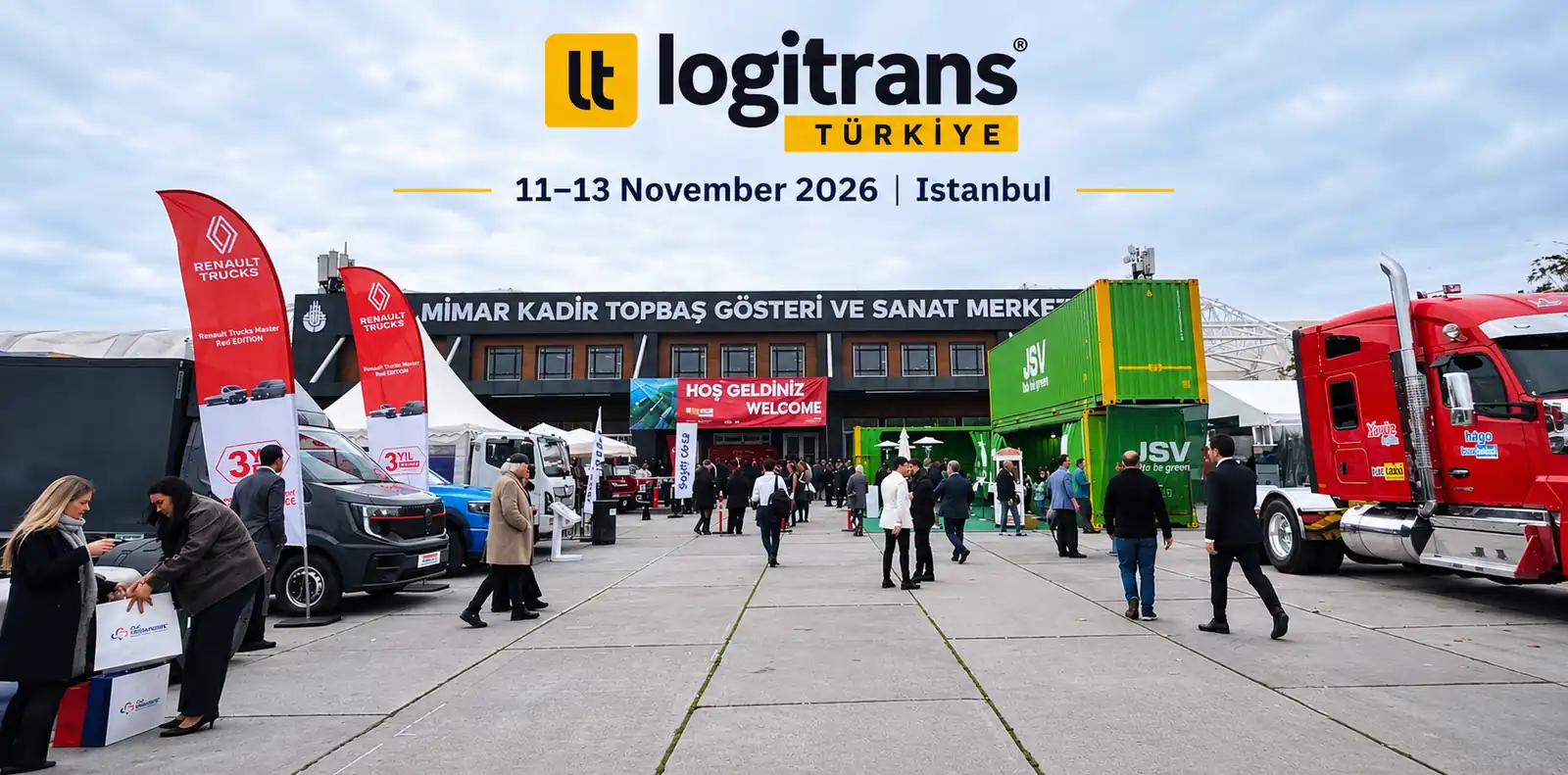
The 2026 edition of logitrans Türkiye brought the international transport and logistics community to Istanbul from 11–13 November. For Global Wave Dynamics, the value of the exhibition was not simply the number of meetings or the range of companies present. It was the perspective the event offered on one of the most important questions in regional logistics: how are businesses connecting Europe with the markets to its east and south?
Istanbul is uniquely placed in that discussion. It sits between mature European logistics networks and fast-evolving trade corridors extending through Türkiye toward the Caucasus, Central Asia, the Black Sea and the Middle East. That geographic position shaped many of the conversations we had during the event.
What stood out in Istanbul was the commercial and operational importance of being able to work across regions that do not always operate in the same way.
For logistics companies, geography only becomes an advantage when networks, infrastructure, operating relationships and commercial access come together.
That is what makes Istanbul relevant. Türkiye is not simply positioned between Europe and Asia; it is part of multiple transport conversations at the same time. Road freight, rail, air cargo, maritime links and multimodal movements all intersect with the country's role in regional trade.
At logitrans, this was visible in the mix of companies and national participation. The 2026 event included international representation from markets including Germany, the Czech Republic, Spain, Greece, China, Austria, France, Italy, Kazakhstan, Russia, Serbia and the United Kingdom.
For businesses looking at Türkiye as a market, a transit point or a gateway into adjacent regions, this creates a very different set of opportunities from a purely domestic logistics event.
Many logistics conversations focus on individual countries. The more interesting question is what happens between them.
A European freight forwarder may need stronger connectivity into Türkiye. A Turkish logistics provider may be looking for deeper access into Germany or the Benelux region. A company serving the Caucasus or Central Asia may need reliable European partners. An air cargo operator may be evaluating Istanbul as part of a broader regional network.
These are not isolated logistics requirements. They are network questions.
logitrans created the environment for those questions to be discussed directly between carriers, forwarders, service providers and other industry participants. For GWD, it reinforced the importance of viewing logistics growth through the lens of connected markets rather than single-country operations.
Entering a new corridor or adding a new market often looks attractive commercially. Operationally, however, expansion introduces complexity quickly.
New customers may require different documentation. New partners may work through different systems. Communication expectations can vary by market. Finance processes, reporting standards, working hours and service levels may all need to adapt.
This is where expansion can become difficult. The commercial team may successfully open a market while the operating model behind it remains designed for the previous one.
Our conversations in Istanbul reinforced the need for logistics businesses to think about operational scalability at the same time as geographic expansion. For companies growing across multiple markets, Global Wave Dynamics Shipping & Logistics support can provide dedicated operational capacity across documentation, shipment coordination, finance support, reporting and other repeatable workflows.
One of the reasons Türkiye continues to attract logistics attention is its position within wider east–west trade flows.
The development of the Trans-Caspian or Middle Corridor has increased interest in routes linking China and Central Asia through the Caspian region, the Caucasus and Türkiye toward Europe. For logistics businesses, this matters because emerging corridors create new requirements for coordination, partner networks, multimodal planning and visibility across multiple borders.
The opportunity is not limited to the physical route itself. Every new corridor creates a parallel requirement for better information flow.
Customers want visibility. Operations teams need consistent milestones. Finance teams need accurate records. Management needs reporting that works across regions.
That information layer is where process discipline becomes increasingly important, particularly when multiple transport modes and partners are involved.
logitrans is particularly relevant because its scope reflects the multimodal reality of the market.
Road freight remains central to trade between Türkiye and Europe, but the regional logistics conversation extends far beyond trucking. Rail is becoming more significant in corridor development. Air cargo benefits from Istanbul's role as an international aviation hub. Maritime services connect Türkiye to the Black Sea, Mediterranean and wider global networks.
For customers, the question is increasingly not which mode is best in isolation. It is which combination of modes can provide the right balance of cost, reliability, speed and resilience.
For logistics providers, that creates an operating requirement: teams and systems must be able to manage information across modes without creating disconnected customer experiences.
A strong theme throughout the Istanbul meetings was the importance of relationships.
Cross-border logistics depends on local knowledge, trusted partners and responsiveness when something changes. That becomes even more important when a shipment moves across several countries, regulatory environments and operating partners.
This is one reason exhibitions such as logitrans continue to create value in a highly digital industry. Logistics platforms can connect data, but regional growth still depends on people who understand how the market works.
For GWD, the event provided opportunities to speak directly with decision-makers from Türkiye and other international markets and to understand how they are thinking about partnership, capacity and expansion.

When markets, modes and partners multiply, the need for consistent digital processes becomes stronger.
Pricing is one example. A company operating across several regions may need to compare different rates, partners and service options quickly. If that work remains dependent on fragmented emails and spreadsheets, complexity rises with every new market.
GWD's FreightX is designed around rate search, quote control and approval workflows that can bring more structure to this part of the commercial process.
The same logic applies after the shipment. Cross-border operations generate financial documentation from multiple suppliers and movements. Tools such as AuditX can help create greater structure around invoice capture, validation and exception visibility.
The point is not that technology replaces regional logistics expertise. It is that technology can create a common operating layer around that expertise.
Another important takeaway from logitrans was that Türkiye should not be viewed only as a transit country.
It is a substantial logistics market in its own right, with a strong transport base, manufacturing activity, international trade relationships and growing importance in regional supply chains.
For international companies, this creates two distinct opportunities: serving the Turkish market and using Türkiye as part of a wider regional strategy.
Those opportunities require different operating choices. A company entering Türkiye may need local commercial relationships while centralizing selected support activities elsewhere. Another may want a dedicated team serving multiple European and regional markets from a common operating structure.
This is where a Global Capability Center model can become relevant, not as a generic outsourcing exercise, but as a way to create dedicated capacity that supports several markets while retaining client-specific control.
Each industry event gives a different view of logistics.
The companies best positioned for the next phase of regional growth will not necessarily be those with the largest physical footprint. They will be the ones that can connect markets efficiently, build reliable partnerships, maintain visibility across borders and scale their operating capability without losing control.
Istanbul made that opportunity very clear.
For Global Wave Dynamics, logitrans Türkiye 2026 was valuable because it brought the strategic questions around Eurasian logistics into practical conversations with the people working in those markets.
The discussions were about routes, but also about relationships. About growth, but also about execution. About technology, but also about the processes that technology needs to support.
As trade networks continue to evolve between Europe, Türkiye, the Caucasus, Central Asia and the Middle East, the logistics opportunity will increasingly belong to businesses that can connect these pieces into one coherent operating model.
logitrans Türkiye 2026 reinforced a simple idea for us: in regional logistics, geography creates the opportunity, but operating capability determines how much of that opportunity a business can actually capture.
If your logistics business is expanding across Türkiye, Europe or neighboring markets, Global Wave Dynamics can help you build dedicated operational support across documentation, finance, back-office processes, shipment coordination and technology-enabled workflows.
Explore GWD's Shipping & Logistics capabilities or connect with our team to discuss where additional operating capacity could support your growth.
.webp)

.webp)
.webp)