TransLogistica Poland 2026: What Warsaw Showed Us About Connected European Logistics
6th November 2026
Three days in Warsaw put Global Wave Dynamics in the middle of a logistics market defined by cross-border networks, multimodal execution and constant coordination. What stood out was not one technology or one service trend, but how closely connected European logistics has become and how much operating discipline that connectivity now demands.
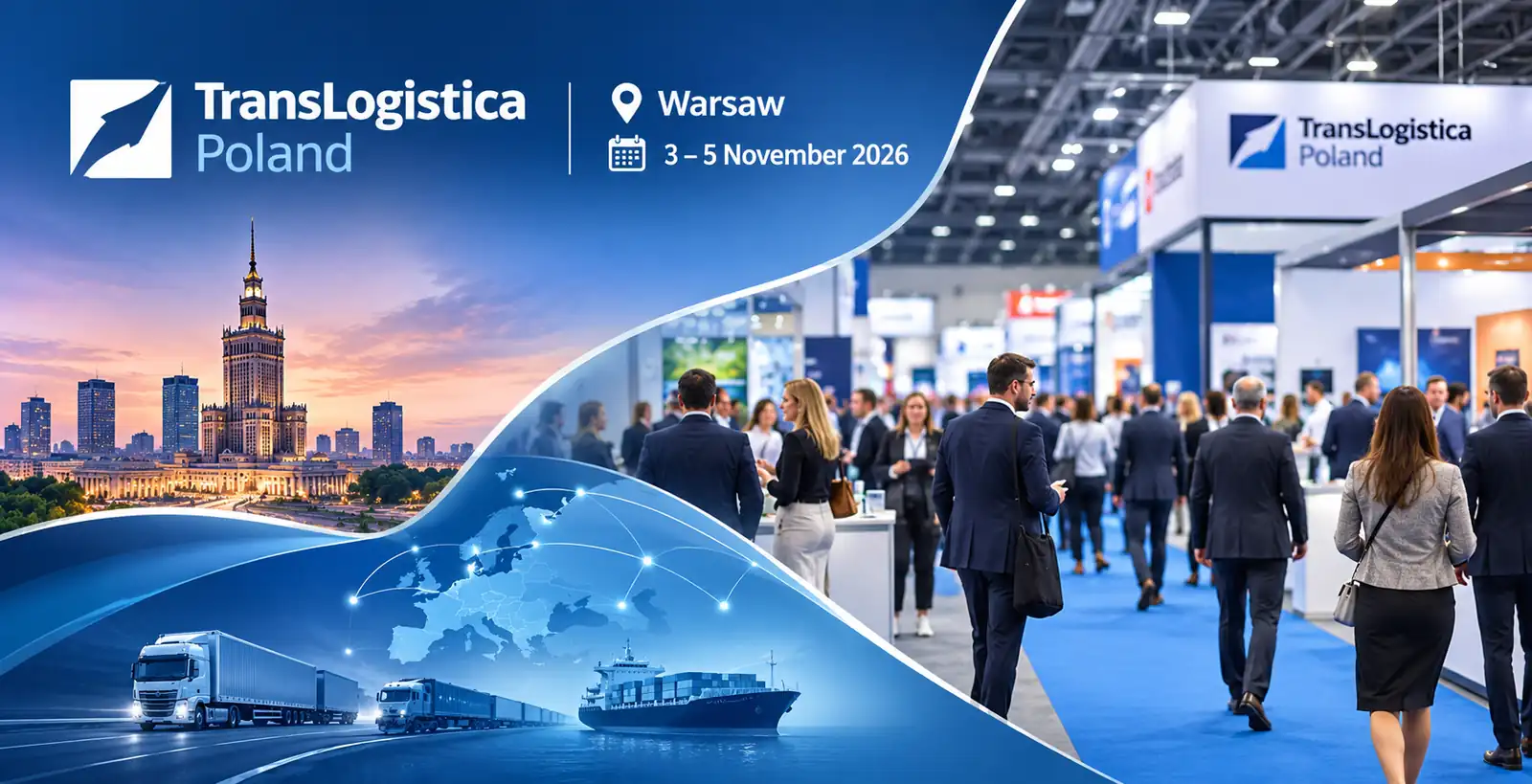
From 3-5 November 2026, TransLogistica Poland brought the transport, freight forwarding, logistics and supply-chain community together at EXPO XXI in Warsaw. The event positions itself as a major business meeting point for Central and Eastern Europe, connecting logistics providers with cargo owners, manufacturers, technology companies and decision-makers across the transport ecosystem.
For Global Wave Dynamics (GWD), Warsaw offered something different from a conventional exhibition recap. It gave us a close view of how European logistics is being shaped by regional connectivity: road and rail networks crossing borders, intermodal partners working across jurisdictions, and logistics teams coordinating customers, carriers and systems across multiple markets.
The strongest takeaway was simple: in a connected logistics network, performance depends on more than moving freight from A to B. It depends on how well information, decisions and operational ownership move across the network with it.


TransLogistica Poland naturally brings a strong European perspective. Companies on the floor represented road transport, rail, intermodal logistics, freight forwarding, customs, warehousing, technology and other services that frequently have to operate as one connected chain.
That matters because cross-border logistics rarely fails at the point where a truck, train or container physically moves. Friction often appears between organizations: a handoff is unclear, status information arrives late, documentation sits in different systems, or a customer needs an answer that depends on several partners.
For logistics leaders, the challenge is therefore not only network coverage. It is orchestration. The more markets and partners involved, the more important it becomes to have clear process ownership, reliable operating data and teams that can keep work moving across time zones and organizational boundaries.
Rail, road and multimodal connectivity were highly visible throughout the exhibition. The appeal of intermodal logistics is clear: it can create more flexible routing options and help companies build broader European networks. But every additional mode also introduces another set of milestones, documents, counterparties and exceptions.
That makes visibility an operating requirement rather than a dashboard feature. A useful visibility model should help teams understand what has happened, what is expected next, who owns the next action and where an exception is developing.
This is one reason GWD's Shipping & Logistics capabilities focus on the operating layer around freight movement: shipment coordination, customer updates, documentation support, reporting and exception follow-up. In a multi-party network, these activities are what keep execution connected.


Another clear impression from Warsaw was the variety of specialist businesses working within the same logistics ecosystem. Some companies are deeply focused on road freight. Others are expanding into ocean, rail, customs, warehousing or broader forwarding services. Many are building partnerships rather than trying to own every part of the chain themselves.
That creates opportunity, but it also changes how operations need to be managed. A company adding a new service line is not only adding revenue potential; it is adding new workflows, new customer expectations and new administrative requirements.
The companies that scale well will be the ones that make those supporting processes repeatable early, before growth turns them into a collection of manual workarounds.
A defining feature of TransLogistica Poland is the connection between providers of transport and logistics services and the manufacturers, distributors and cargo owners that use them. That changes the quality of the conversation.
Instead of discussing logistics only from a provider perspective, the event creates direct exposure to what customers value: dependable communication, predictable execution, visibility when something changes and confidence that operational details will not become their problem.
For service providers, this is an important reminder that operational excellence is part of the commercial proposition. A strong sales promise has limited value if the supporting processes cannot deliver the same experience consistently after the customer is won.

Our meetings at TransLogistica Poland were valuable because they were specific. The discussions were not framed around a generic "digital transformation" agenda. They were about how individual logistics businesses are evolving.
Some are widening their service portfolio. Some are entering new markets. Some are looking for stronger operational support as volumes grow. Others are considering how technology can reduce manual effort without disrupting the way their teams already work.
That diversity matters. It confirms that there is no single template for logistics improvement. The right operating model depends on the company's network, service mix, customer base and stage of growth.
For GWD, the role is therefore not to force every business into the same model. It is to identify where recurring operational work is limiting scale and then build the right combination of dedicated people, process governance and technology around that need.
The Warsaw conversations also reinforced why distributed operating capability is becoming relevant to logistics companies with multi-country operations. When support work is fragmented across local teams, the business can end up repeating the same activities in several locations while still lacking consistent reporting and ownership.
A dedicated capability model can centralize selected processes without centralizing every business decision. Customer-facing judgement and local market expertise can stay close to the market, while repeatable operational, finance, reporting or technology work is managed through a structured shared capability.
For organizations that need a more dedicated model, GWD's GCC-in-a-Box provides a path to build client-specific capability with governance and scalability designed around the business rather than a generic outsourcing structure.
The most useful outcome from three days in Warsaw was not a list of trends. It was a clearer picture of how logistics companies across the region are connecting markets, modes, partners and customers, and where the operating strain appears as those networks expand.
TransLogistica Poland showed why Central and Eastern Europe remains such an important logistics crossroads. It also showed that the next phase of growth will depend on more than physical capacity. Companies will need operating structures that can keep information, service and accountability moving as efficiently as the freight itself.
For Global Wave Dynamics, that is the conversation we are taking forward from Warsaw: how to help logistics businesses build the operational backbone that allows a connected network to scale without becoming a more complicated one.
TransLogistica Poland 2026 reinforced a distinctly European lesson: the stronger the network becomes, the more important it is to make the work between every connection visible, owned and repeatable.
When a shipment moves from road to rail or passes to a partner in another market, a missing document or a late status update can delay the next step. GWD helps logistics teams define who checks documents, confirms milestones and escalates exceptions at each handoff.
Discuss a cross-border workflow with GWD and identify one process to improve as your European network grows.
.webp)

.webp)
.webp)